AC
Level 2
For vehicles parked two hours or more.
- Typical power
- 7.2–19.2 kW
- Common fit
- Workplaces, parkades, fleets, hotels
- Electrical approach
- 208–240 V circuits, often with managed load

Winnipeg base · Projects across Canada
We plan and install Level 2 and DC fast charging around what your property can actually support. Capacity first. Equipment second.
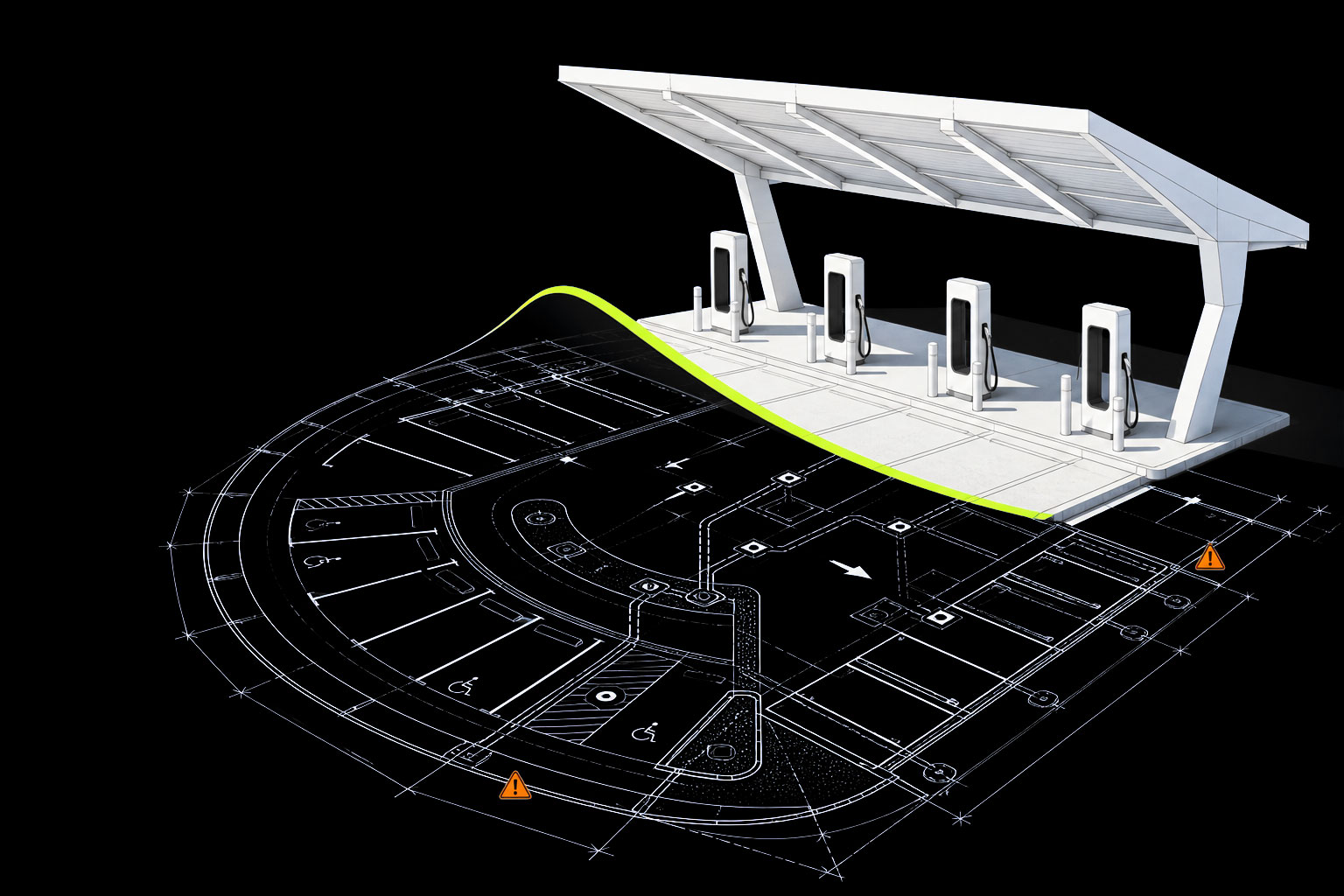
A project moves only when the stage before it is clear. You see the scope and cost before equipment is ordered.
Review the service, connected load, parking, cable routes and how vehicles use the property.
Set charger count, placement, panel work, load management and room to expand.
Prepare the written scope, permits, utility coordination and a schedule around your operations.
Install, inspect, commission, test every stall and walk your team through the finished system.
The right hardware starts with how long the vehicle is parked and how much power the site can share.
For vehicles parked two hours or more.
For vehicles that need useful range in under an hour.
Power levels and charging times are general industry ranges. Vehicle, temperature, battery state and available site capacity all affect real performance.
A fleet depot has a dispatch clock. A workplace has an eight-hour dwell window. A condo has ownership and billing questions. The electrical design follows those realities.
Map your siteEnergy management shares available capacity between chargers and eases them back when the building draws hard. A load calculation shows whether that can avoid a panel or service upgrade on your site.
EVC Install Canada also works in solar, wind and energy storage. If those are on the roadmap, planning conduit, panel space and pad locations now can keep the site from being opened twice.
Often not. A load calculation shows what the existing service can carry, and energy management can share capacity between chargers. Some sites genuinely do need an upgrade; if yours does, it belongs in the written scope before you commit.
Often fewer chargers on infrastructure prepared for more. Installing conduit, panel capacity and mounting for the intended build-out can make later additions much simpler than opening the parking area again.
Equipment lead times, permits and utility involvement all matter. A straightforward Level 2 install and a multi-charger DC fast site have very different schedules. You receive a project schedule with the written scope.
Yes. Networked chargers can authenticate users, track energy and bill directly. Sub-metering is another option. The right approach depends on the property and how much administration the operator wants to manage.
Yes. The office is in Winnipeg and EVC Install Canada takes on projects across Canada.
Send what you know. A site address, panel photo and parking layout are useful, but none are required for the first conversation.